About us
A training and testing centre in Tashkent.
We train English teachers, find learners their level and supply genuine Cambridge materials — as part of International House, a worldwide network founded in 1953.
Chapter one
International House, the network
International House is a network founded in 1953 that has trained teachers since 1962. The milestones below belong to the network, not to IH Uzbekistan.
 1953
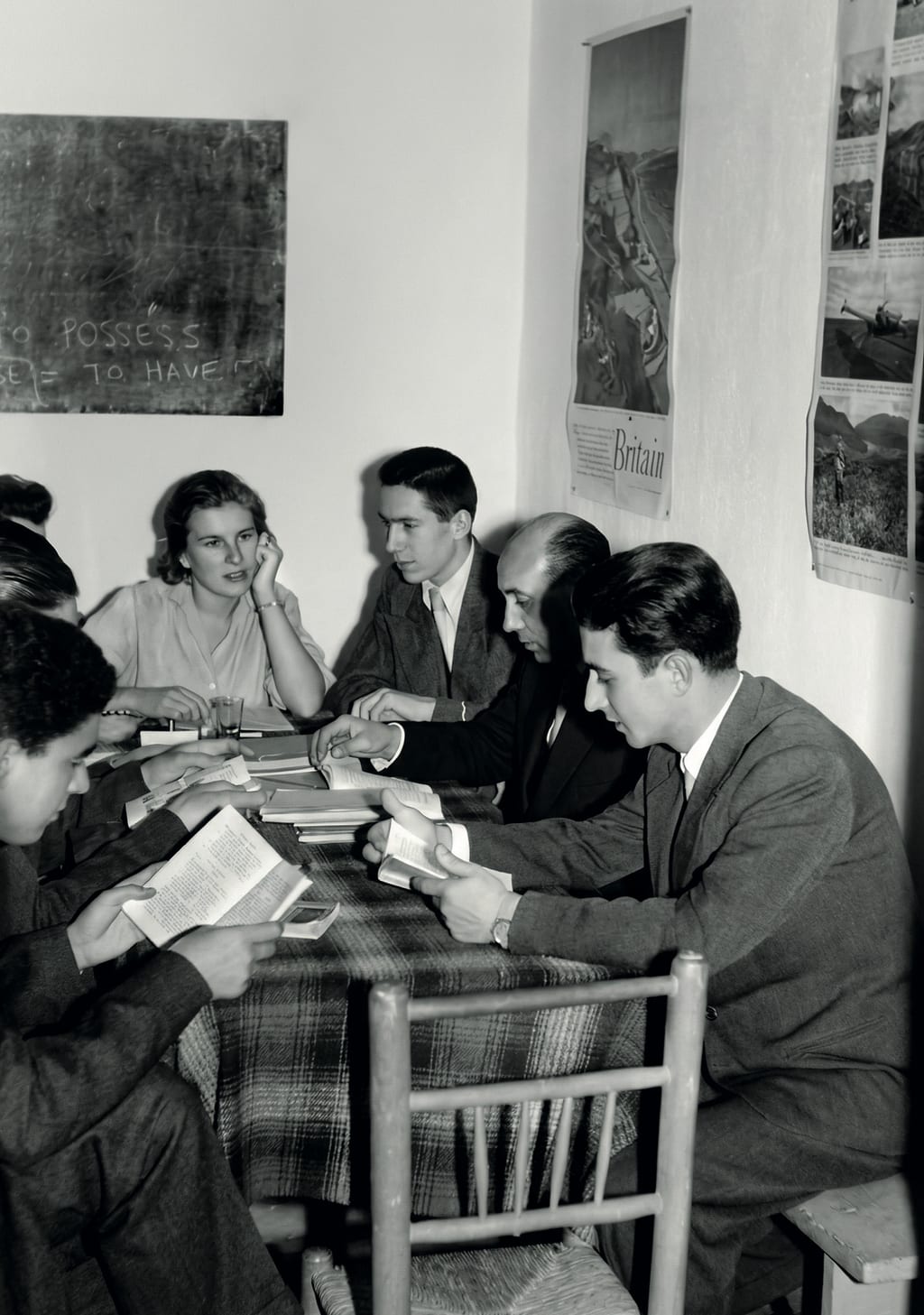
One school in Córdoba
John and Brita Haycraft opened a language school in Córdoba, Spain, built on a simple idea: that language is learned by using it, not by studying rules about it. Within weeks it was full.
Awaiting confirmation from International House World Organisation
 1959
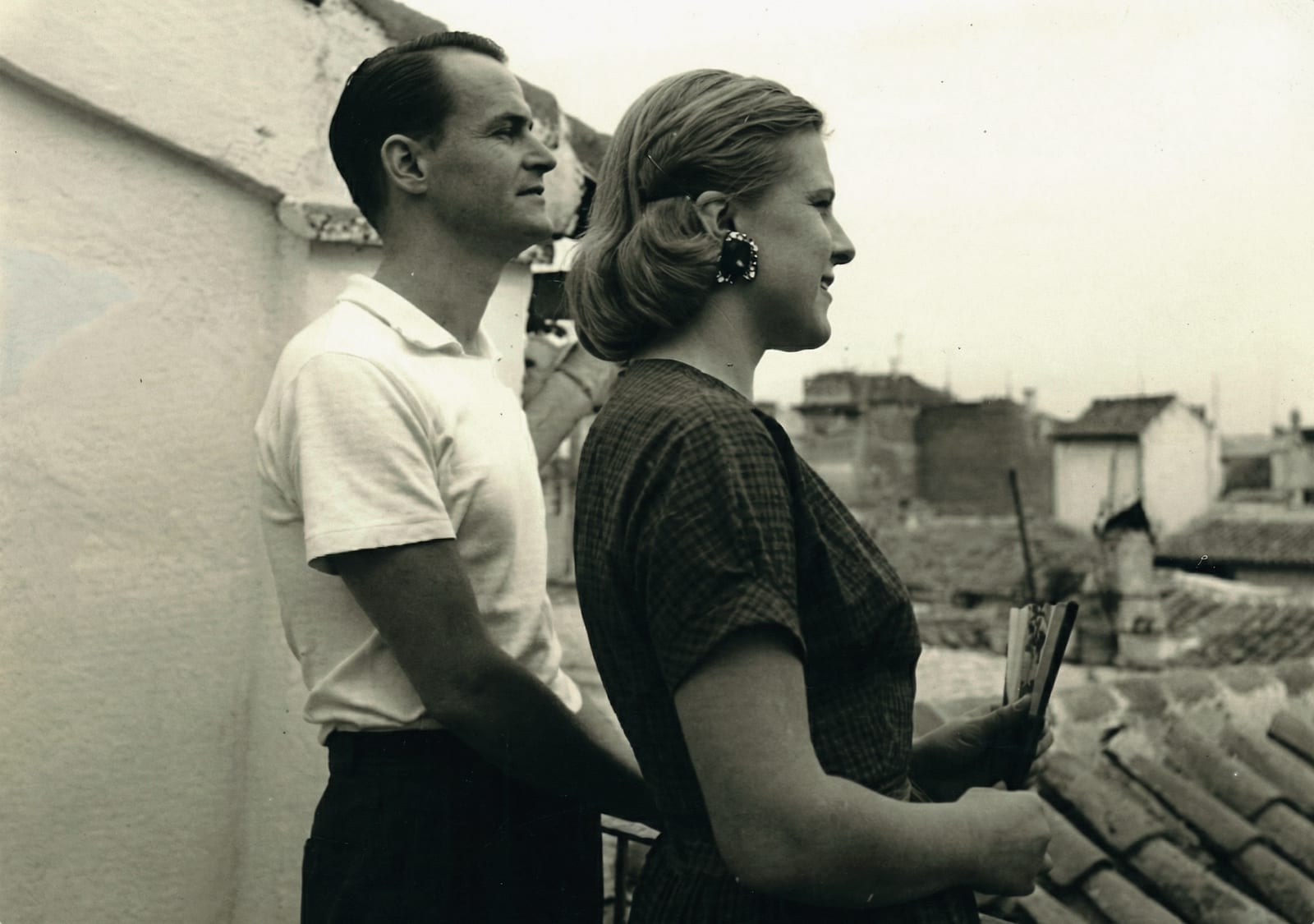
Two ideas carried to London
After six years in Spain the Haycrafts returned to London with two ambitions — to raise teaching standards through a network of affiliated schools, and to train teachers in what actually happens in a classroom.
Awaiting confirmation from International House World Organisation
 1962
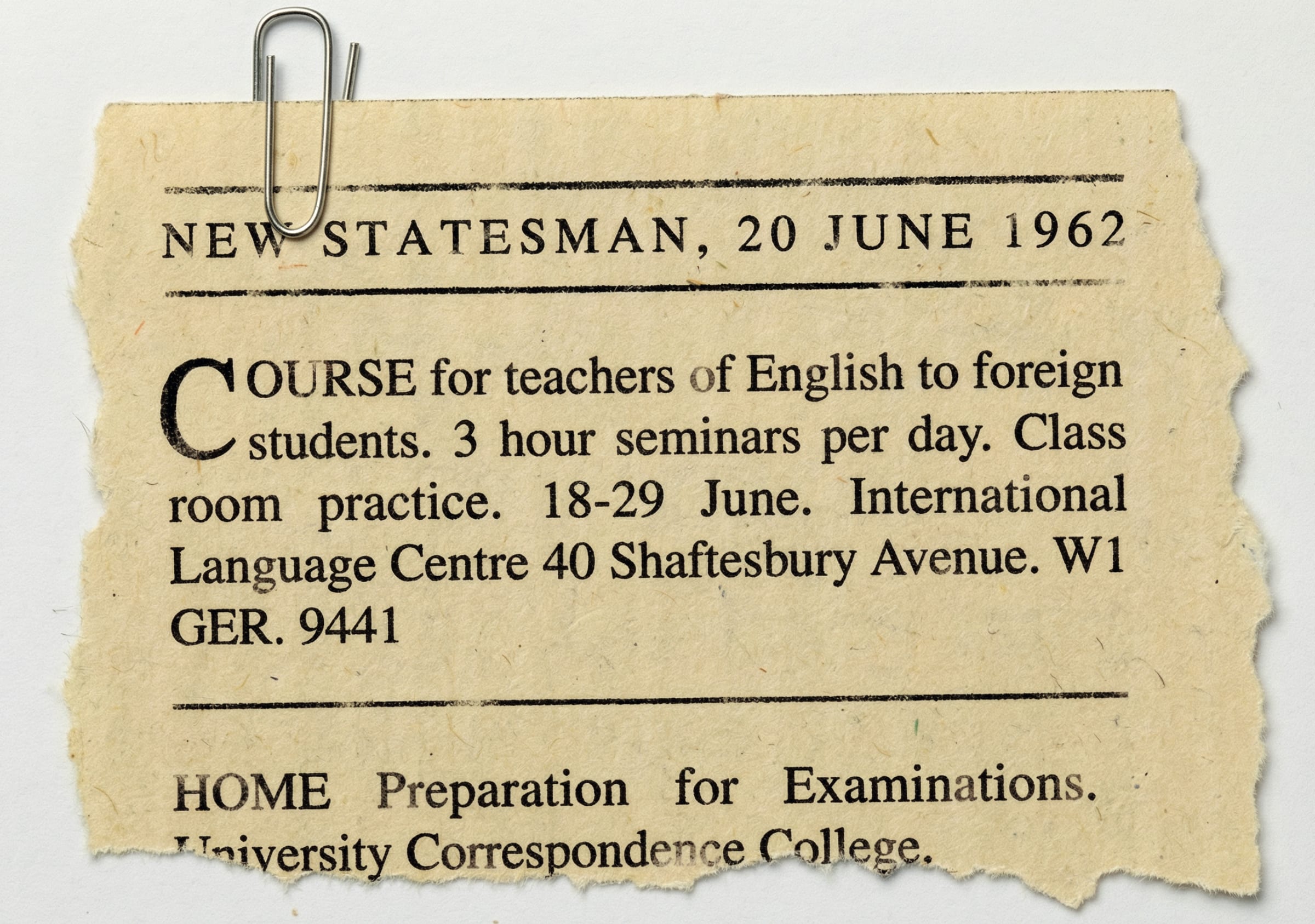
Teacher training is invented
International House ran the first formalised, practical training course for language teachers. Before this, teachers were largely left to work it out alone.
Awaiting confirmation from International House World Organisation
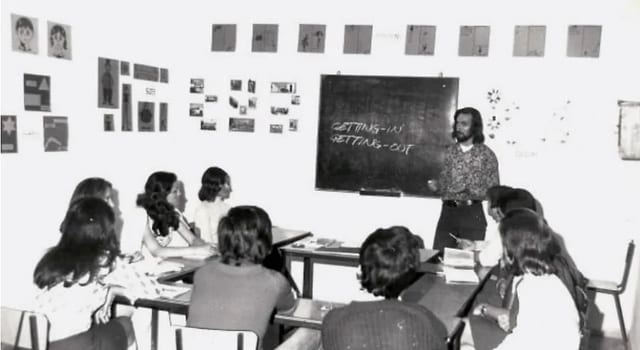 1960s–70s
The course becomes a qualification
What began as an in-house course was adopted as the Royal Society of Arts Certificate, and later became the qualification that language schools worldwide still recognise as the entry standard.
Awaiting confirmation from International House World Organisation
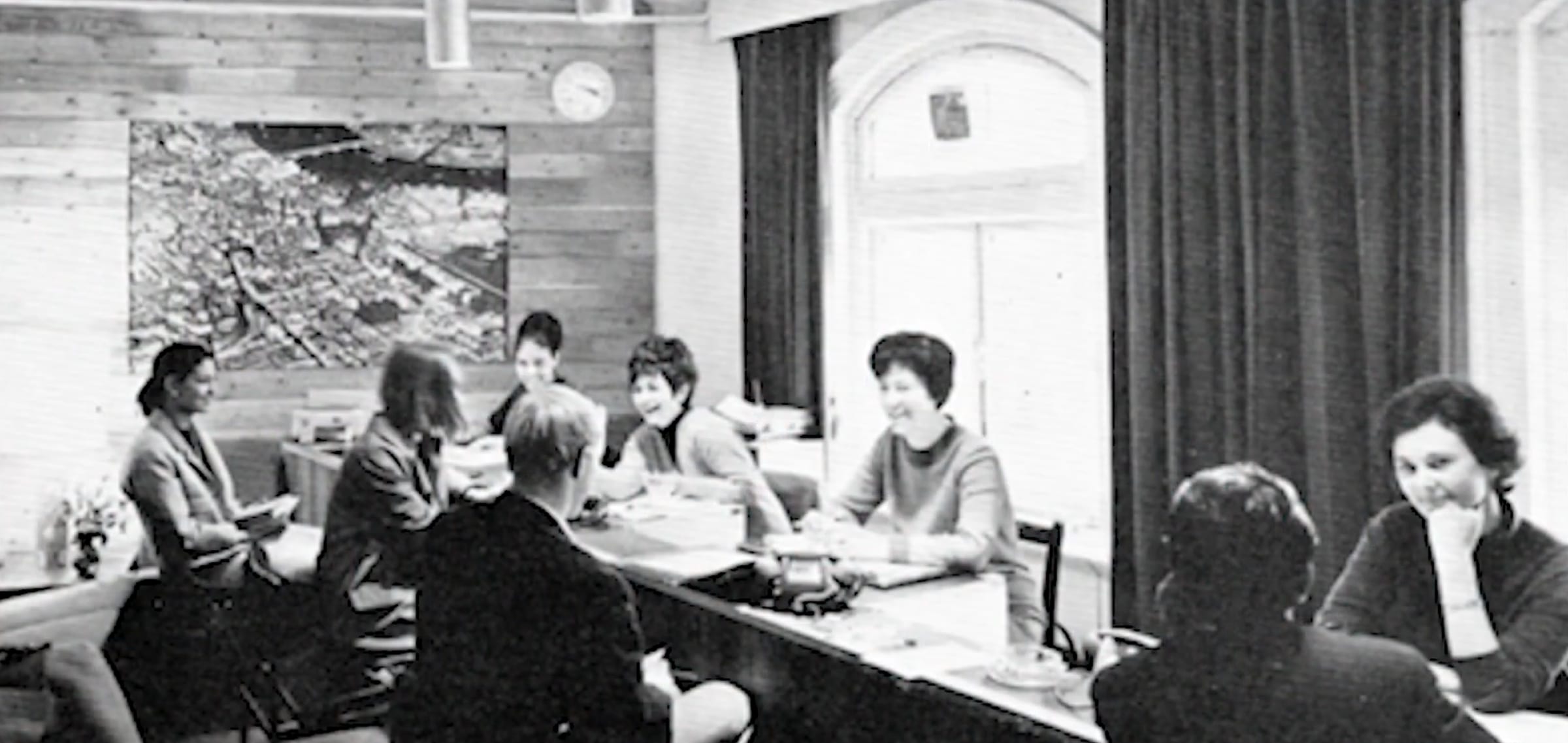 1974
A network with standards
A non-profit educational trust was established to hold the network to shared standards of teaching and teacher training, rather than letting each school set its own.
Awaiting confirmation from International House World Organisation
 1996
A network across the world
By the time John Haycraft died, the single school in Córdoba had grown into a network of schools around the world.
Awaiting confirmation from International House World Organisation


Where International House is today.
Countries with an International House school. Point at a country, or tap it, to see how many.
- Uzbekistan
- Countries with International House schools
- Other countries
School counts are as listed in IH World’s school directory, read on July 19, 2026.
- Full list of countries where International House operates, with the number of schools in each.
- Uzbekistan: 3 (as listed in IH World’s school directory)
- Italy: 24 (as listed in IH World’s school directory)
- Spain: 15 (as listed in IH World’s school directory)
- Mexico: 12 (as listed in IH World’s school directory)
- France: 10 (as listed in IH World’s school directory)
- United Kingdom: 7 (as listed in IH World’s school directory)
- Portugal: 6 (as listed in IH World’s school directory)
- Colombia: 4 (as listed in IH World’s school directory)
- Poland: 4 (as listed in IH World’s school directory)
- Ireland: 3 (as listed in IH World’s school directory)
- Kazakhstan: 3 (as listed in IH World’s school directory)
- Pakistan: 3 (as listed in IH World’s school directory)
- Saudi Arabia: 3 (as listed in IH World’s school directory)
- Ukraine: 3 (as listed in IH World’s school directory)
- Argentina: 2 (as listed in IH World’s school directory)
- Ecuador: 2 (as listed in IH World’s school directory)
- Germany: 2 (as listed in IH World’s school directory)
- Myanmar (Burma): 2 (as listed in IH World’s school directory)
- Romania: 2 (as listed in IH World’s school directory)
- South Africa: 2 (as listed in IH World’s school directory)
- Türkiye: 2 (as listed in IH World’s school directory)
- Vietnam: 2 (as listed in IH World’s school directory)
- Bulgaria: 1 (as listed in IH World’s school directory)
- Canada: 1 (as listed in IH World’s school directory)
- Chile: 1 (as listed in IH World’s school directory)
- Croatia: 1 (as listed in IH World’s school directory)
- Czechia: 1 (as listed in IH World’s school directory)
- Egypt: 1 (as listed in IH World’s school directory)
- Estonia: 1 (as listed in IH World’s school directory)
- Georgia: 1 (as listed in IH World’s school directory)
- Hungary: 1 (as listed in IH World’s school directory)
- Jordan: 1 (as listed in IH World’s school directory)
- Laos: 1 (as listed in IH World’s school directory)
- Latvia: 1 (as listed in IH World’s school directory)
- Lebanon: 1 (as listed in IH World’s school directory)
- Libya: 1 (as listed in IH World’s school directory)
- Malta: 1 (as listed in IH World’s school directory)
- Montenegro: 1 (as listed in IH World’s school directory)
- Peru: 1 (as listed in IH World’s school directory)
- Serbia: 1 (as listed in IH World’s school directory)
- Slovakia: 1 (as listed in IH World’s school directory)
- Thailand: 1 (as listed in IH World’s school directory)
- Uruguay: 1 (as listed in IH World’s school directory)
Chapter two
IH Uzbekistan
What we do in Tashkent today.
 Today
International House Uzbekistan
IH Uzbekistan is a testing and training centre headquartered in Tashkent, working to the standards shared across that network. The Haycrafts started with one conviction: teachers deserve proper training. That is what our courses are for.

What we do.
- 6IH teacher-training coursesIn three stages, from your first structured one-to-one lessons to advanced methodology.
- A1–C2Free placement testAbout 30 questions, about 20 minutes, no sign-up — in English, Uzbek or Russian.
- Unity PressOfficial Cambridge distributorOur sister company Unity Press supplies genuine Cambridge University Press & Assessment books.
What we stand for.
Practical before theoretical
Training that changes what happens in your classroom on Monday morning.
Standards you can carry
We work to the standards shared across the International House network, so what you earn here is understood elsewhere.
Teachers supporting teachers
Our trainers teach. They are in classrooms too, and they train from current practice rather than memory.
Come and see us.
- Address
- Fidokor 1st Dead End Street, Tashkent
- Opening hours
- Mon–Sat 09:00–20:00 · Sunday closed
Our patterns. The shapes on this site are inspired by Uzbek crafts: ikat (abr) from Margʻilon in the Fergana Valley, Rishton ceramics, the girih geometry of Samarkand and Bukhara tilework, and Khiva wood carving. They are our own drawings, made with respect for the makers.